




Contents
If you have never heard of the expression Biophilic Design before do not worry you are not the only one. However, you have been part of a biophilic landscape for some time now without noticing it at all.
The meaning of the word biophilic is in essence our tendency to want to interact with nature and I am not talking about long walks in the countryside or trekking up the highest peaks in your nearest National Park but the plant pot next to your desk at work, the hanging basket in your lounge or more often nowadays the new green spaces in communal buildings.
Without realising it you have been part of the rise in biophilic design for quite a while and as we move closer to 2023 you will notice the uptrend in not just your everyday spaces but in your own home too with a self-appointed biophilic garden room in the home.

Are there any benefits?
It is more than just a philosophy or new design idea, but a way to support your physical and mental wellbeing. More office spaces and factory floors are embracing this natural environment ethos as a simple path to enhance positivity and therefore productivity.
The cynical amongst us will be thinking, well it’s just a few plants in a room and I couldn’t care what they are anyway. But just imagine that room without any greenery, the stark walls, empty cavernous floor space and nothing to focus on. The lack of natural light and fresh air starving us of what we need to stimulate our cognitive function.
If we are aesthetically pleased by our environment, it produces not just endorphins into our brains but a calmness that will improve our general morale. So why not equate that to time indoors to reduce stress levels and be happier?
The visual connection that we as humans have when we are closer to nature can help us combat fatigue and restore our ability to function to our highest level. So a good garden room would do all these things and more.

How Can I Set Up A Biophilic Garden Room?
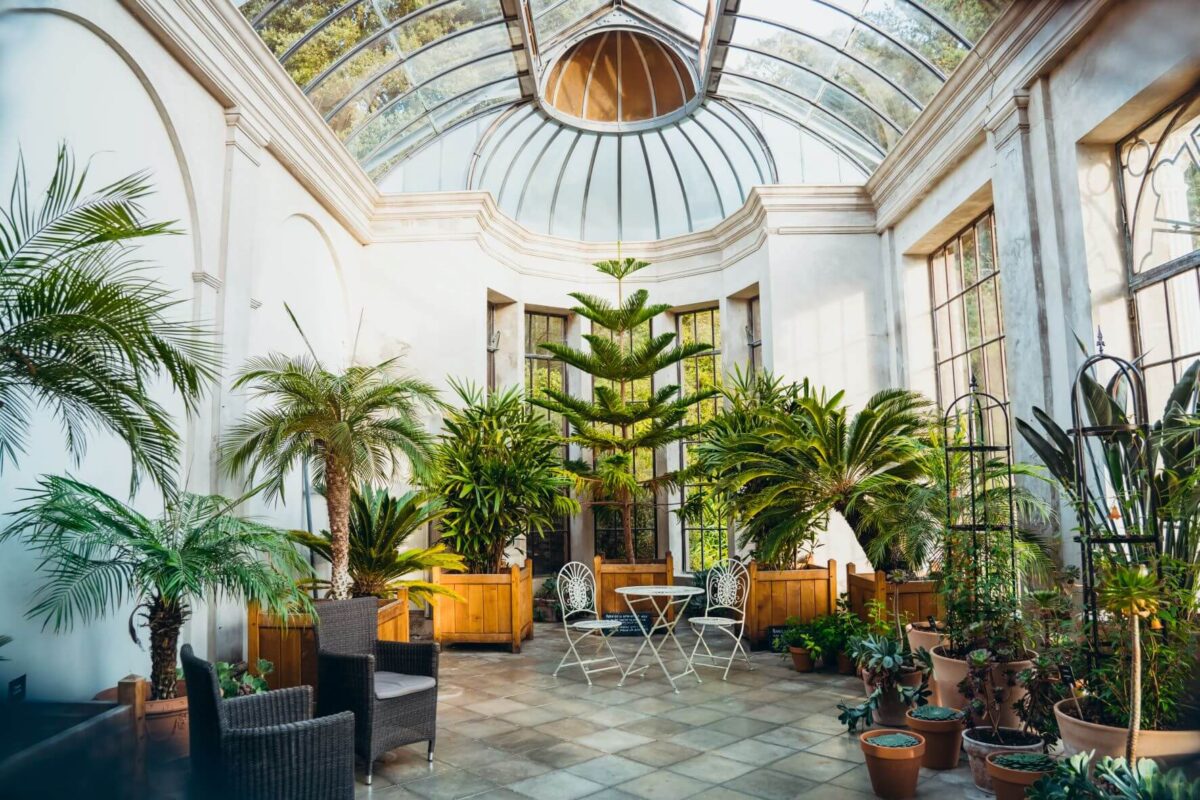
It is much easier than you would think and as it is yours you can have whichever elements suit you. Start off simply with a couple of smaller plants such as palms, succulents, ferns, living walls and spider plants. All are easily managed and have the ability to grow to the size you want depending on the size of the pot you plant it in.
Palms: These, if you have room can give you the height you need to create a statement piece that the other plants you choose can act as companions to.
Succulents: Come in all shapes and sizes and can be extremely pleasing to the eye. Try using cacti as they are very low maintenance and will thrive in natural sunlight.
Ferns: They are the opposite to a succulent as they do not require too much natural light but will need a regular watering regime.
Spider Plants: These are a great plant to use to gain height in the look. They are not necessarily big, but the use of a hanging basket will accentuate them.
Living Walls: Or sometimes known as green walls are an amazing use of bringing nature inside. It can range from a full wall essentially covered in moss to climbing plants. These do however require quite an amount of looking after so before taking this on please be aware you will need green fingers.
These are just recommendations as you can personalise the room to fit in around your tastes and there is nothing to stop you from adding colour with flowers, whilst not strictly in the realms of biophilic design it is after all your personal domain.

Do I need a Specific Room?
Not at all. It can be any room in your house but there are a few considerations prior to setting up. It does not have to be just one room; it can encompass your whole house from the entrance hall to the bathroom. Adding some elements across each room will enhance all of the health benefits and lift the spirit of all of the occupants.
If you are lucky enough to be able to dedicate one entire room to biophilia then try to ensure it contains some of the following features:
- Natural light
- Plants
- Comfortable seating
- Organic shapes
- Natural materials
- Fireplace
- Water feature
These can be abundant or sparsely used and all can be added to or taken away as the mood suits you.
One important element is that you declutter and resist the urge for this wonderful utopia to turn into additional storage facility. Clambering over laundry and kid’s toys is not going to create the ideal ambience that you will need to enjoy your new lifestyle.

Can this space be multi-functional?
Of course it can be as in many cases the room or space you choose for your main biophilic experience will have to double-up from time to time due to the constraints of modern family life.
One great example I saw recently was using it for exercise and yoga as the aura you would have created will be fully in line with the health focus that any form of exertion brings into your life.
What about using it for a place of study so that you or your children could enjoy the peace that the environment ushers in which will ultimately lead to more retention of the information.
Nature or Nurture?
Both is my definitive answer to that. Not only are you attempting to be at one with nature, but you get to nurture it too. In my research into biophilia one factor that seems to be overlooked is the enjoyment you get from caring for the plants you have chosen, it is not just about sitting in your garden contemplating what joy you are feeling it is also the fact that you will have to care for these beautiful and calming plants.
The exploration into how much water, sunlight and ventilation you will need to apply, to the unbridled joy of watching them grow and flourish cannot not be underestimated.
Top tip: I recently listened to a podcast from by Matt Morley Wellbeing and Sustainable Interior Biophilic Design Podcast — GREEN & HEALTHY BUILDINGS (biofilico.com) and his guest gave some great advice about changing the location of your plants and seating every once in a while to give you a newer perspective and encourage a fresher outlook to enhance your day.
You are in charge
Always remember when looking into the multitude of biophilic design ideas that are available that you get to decide what you have in your newly built environment. You can add touches that are not listed by myself or others but nevertheless make you happy.
Plants that you like and furniture you are attached to will only increase your connection to the garden and therefore improve your overall health which is the objective to all of this anyway.


