





It is only as temperatures drop precipitously that we truly appreciate our central heating systems for keeping our homes warm. The understated technology behind home heating is easily taken for granted, though the cost of running it in this day and age has seen many come to terms with how privileged we are to enjoy on-demand heating at all.
The onward march of progress continues to change the shape of domestic life, however – with smart technology the next commercially-accessible frontier. But how do these two topics intertwine?

Central Heating Today
Today, the average home heating system has come a long way from the early days of central heating. Early and mid-century homes were commonly retrofitted with a gravity-fed ‘conventional’ boiler heating system, wherein the attic housed two water tanks – one for hot water, and one for cold. The boiler would heat the water in the ‘hot’ tank, which would then feed radiators, taps and showers via pipes.
This was a highly inefficient way of heating water, as heat would escape through the roof via convection. It was also somewhat impractical, as hot water could be ‘used up’ in a short period of time, requiring the household to wait for the hot water tank to re-heat.
Today, the majority of central heating systems are fed by a combi boiler, which heats water ‘in situ’ and on demand as it flows into the home. This is much more efficient on balance than conventional boiler systems, and ensures hot water is always available for whatever use at any given time, and hot water heating system can easily circulate on demand.

Smart Tech and IoT
Separately, a technological revolution was taking place in the realm of electronics. As electrical engineering continued to break new ground, so too were new modern conveniences invented – bringing us to a futuristic present of touchscreen smartphones and ‘smart’ home devices or appliances. It might be said that the closest technology we have to science fiction is the ‘internet of things’, or IoT.
IoT-enabled devices are able to talk to one another across the internet, i.e. via your home’s wifi connection. This enables more complex tasks to be automated between separate devices, or even controlled by a hub device. This is the brains by which smart device control is, more or less, made possible – and by which home heating systems can be rendered more useful and more efficient.
This opens up the opportunity to things like opening or closing your homes windows automatically based on internal and external conditions like temperature and air quality.
Benefits of Smart Control
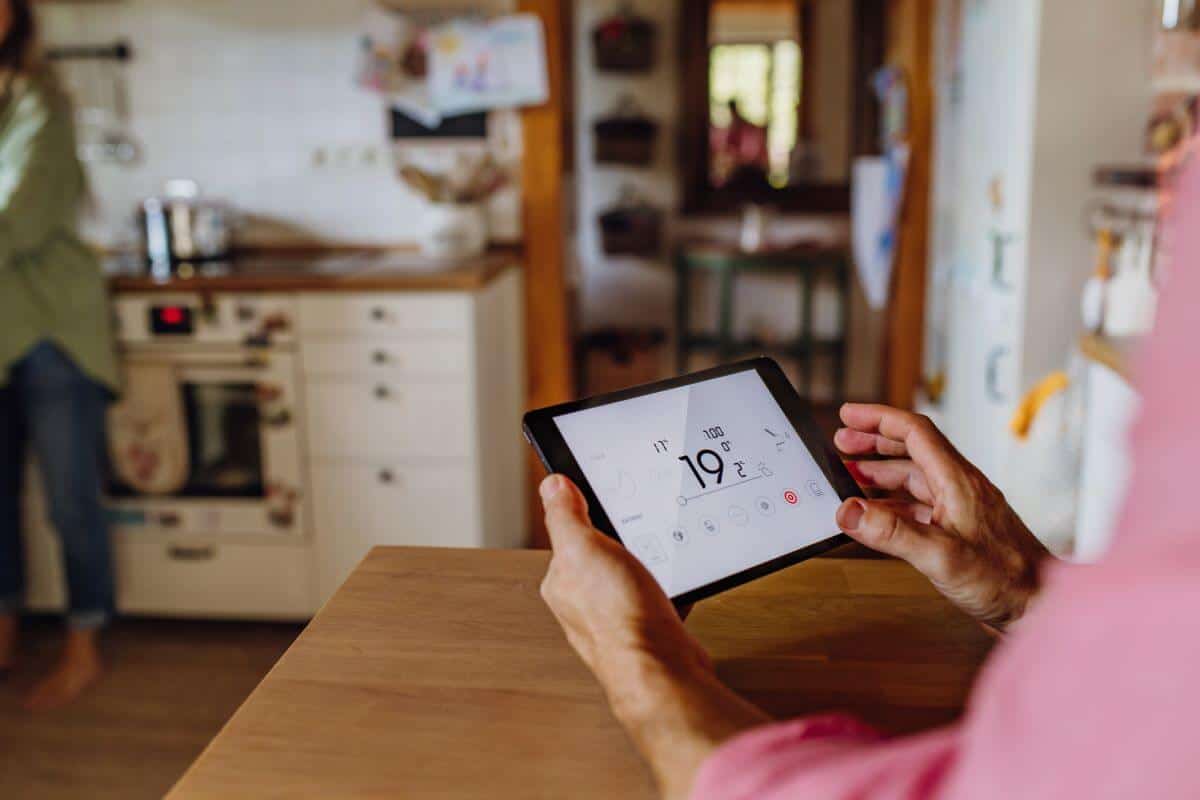
Smart control of a central heating system can present in a number of different ways, but the most consumer-friendly iteration is via app control and a smart thermostat. With smart sensors and IoT capabilities, modern combi boilers can be controlled or automated via smartphone app. This means that occupants can heat their homes room by room, or pre-heat their home on their commute from work. The technology can also learn your heating habits and know when you are away and heating is not needed. This means more efficiency and lower bills.
Conversely, it also means that occupants can monitor their home energy usage more directly. This allows them to cut down on wasteful heating, hence cutting both their energy bill and carbon footprint. This is a crucially important consideration today, as climate change continues to impact every continent.
Currently, there is no smart technology that will tell you when to bleed your radiator, but for temperature control it’s ideal. Ultimately reminders to get a boiler service booked, maintenance and repair indications are imminent I suspect.


