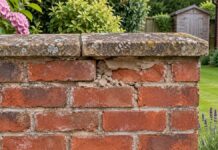




The mortar for a garden wall depends on the brick or block, the weather exposure and the type of work. Start by identifying whether you are laying new masonry, rebedding a loose unit or repointing existing joints. Those jobs also use different methods for estimating how much mortar to buy.
| Job | What to check |
|---|---|
| New brickwork | Check the brick specification and choose a masonry mortar the supplier or designer confirms is suitable for the wall’s exposure. |
| New blockwork | Check the block manufacturer’s laying guidance. The block type and joint system determine which mortar is suitable. |
| Rebedding a loose brick or block | First check that the rest of the wall is sound and the damage is local. Identify why the unit came loose and choose mortar compatible with the unit and its bedding. |
| Repointing older brickwork | Match the original mortar’s properties to the masonry and exposure. If the bricks are soft or the mortar is unclear, ask a bricklayer experienced in traditional masonry. |

New brickwork or blockwork
Check the brick or block specification and ask the supplier or designer for the mortar required for the wall. A freestanding wall takes rain from both sides and may be exposed to frost. Explain where the wall will sit, what it will be built from and whether it has a coping. Check the product is specified for the work before you compare prices. If the wall retains soil or supports a heavy gate, have the design and materials checked before ordering.
Ready-mixed dry mortar comes with instructions for water, working time and weather limits. If you are mixing from separate materials, follow the specified mortar mix. Keep batches consistent and follow the product or design guidance for protecting fresh work from rain and frost.
Repointing an existing wall
Repointing fills the part of a mortar joint that has failed at the surface. Look for what caused it. An overflowing gutter or damaged coping can wet the same part of the wall repeatedly. Leave sound mortar in place and identify what the wall was originally built with. Older, softer bricks often need a compatible lime mortar. A hard cement-rich repair can cause damage to softer masonry. A bricklayer experienced in traditional work can help identify the mortar if you’re unsure. Historic England’s repointing guidance.
Rebedding a loose brick or block
Rebedding means taking out the loose unit and seating it again on fresh mortar. Consider it only for a small local repair on a wall that is upright and sound. Check for loose units nearby, movement and a source of repeated wetting. If the unit is damaged, choose a compatible replacement. A loose top course, several loose units or movement in the wall calls for an assessment before you disturb it.
Work out how much to buy
For a new wall with full-depth joints, enter the wall length and height, openings, brick or block dimensions and joint thickness in the brick, block and mortar calculator. Calculate each leaf of a cavity wall separately. If you’re laying hollow blocks on their face shells or using specialist joints, use the manufacturer’s coverage figures.
Read the data sheet for the mixed yield in litres per bag. The weight of the dry bag in kilograms measures something different. For example, if the calculator estimates 72 litres including your waste allowance and the product yields 20 litres per bag, 72 ÷ 20 = 3.6. Round up to four bags. The calculator does this automatically when you enter the yield.
For repointing, use the product’s coverage figures or estimate from the joints you actually plan to fill. For example, 20 m of joints, each 10 mm wide and filled to a depth of 20 mm, takes roughly 4 litres before allowing for waste or uneven joints. Those figures demonstrate the calculation. Determine the appropriate depth for your masonry and the repair specification.
Take this information to the supplier
- A photo and the brick or block type and dimensions.
- Whether the job is new laying, rebedding or repointing.
- The wall’s exposure and whether it retains soil or carries a gate.
- The estimated mixed volume and the product’s stated yield or coverage.
Further Reading